

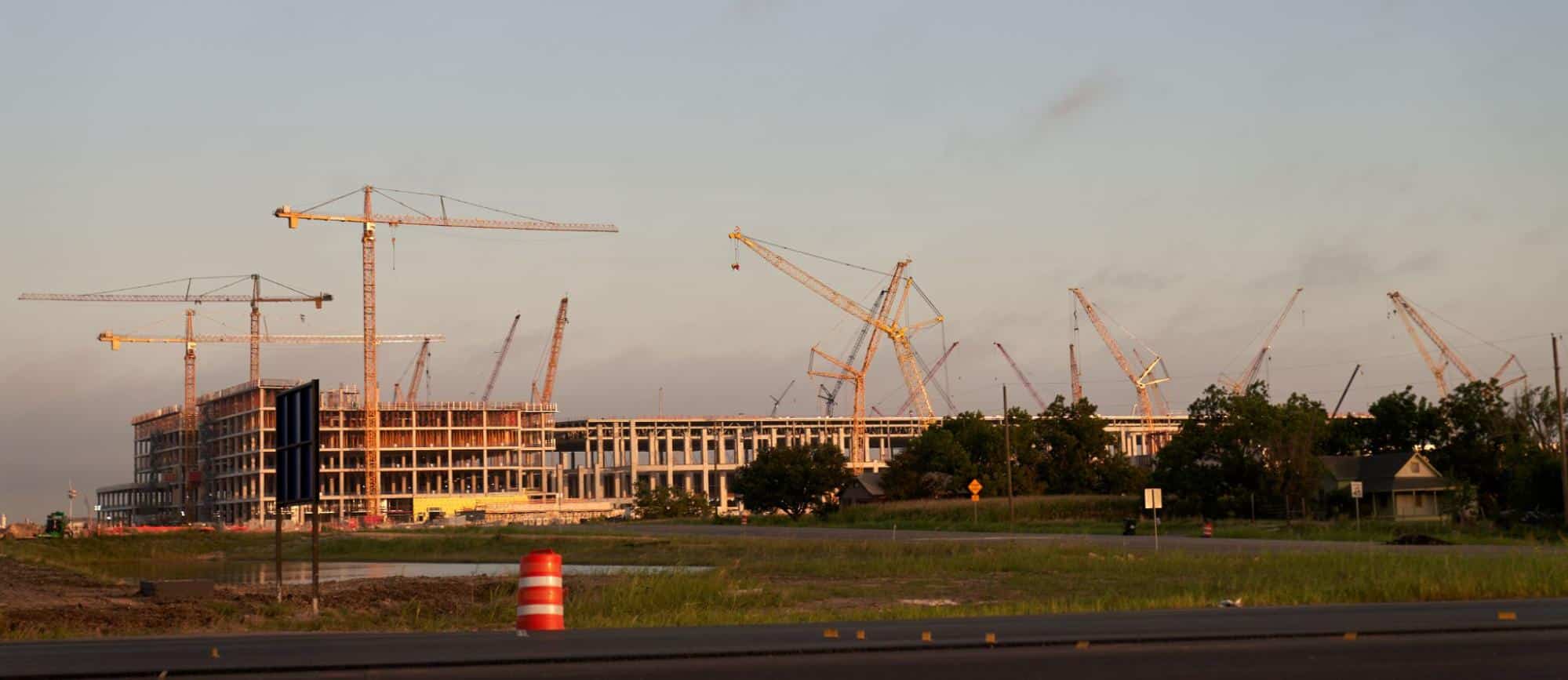
Grid-scale battery storage is one of the fastest-growing segments of US energy construction, and every project shares the same physical reality: heavy, container-sized units have to be offloaded, lifted, and set with precision. Crane services for battery energy storage (BESS) construction cover exactly that work, from staging power conversion skids to placing transformers and battery enclosures on their pads. The lift can look routine from the outside, but it rarely is.
Key Takeaways
- BESS construction crane work means offloading, lifting, and precisely placing battery enclosures, power conversion skids, and transformers onto prepared foundations, where weight at radius and ground conditions drive the crane class.
- US developers plan to add 24 GW of utility-scale battery storage in 2026, up from a record 15 GW in 2025, about 28% of all new capacity additions, second only to solar.
- A single Tesla Megapack 2 XL weighs up to 84,000 lb (about 42 US tons) and ships container-sized, so unit weight at radius, not just total tonnage, sets the equipment requirement.
- Crane selection on a BESS site is weight, radius, ground, and site driven, which is why an engineered, operated approach fits these projects better than a guess at tonnage.
- “Crane for battery energy storage” has two meanings online. This guide is about cranes that lift and place BESS units, not batteries that power cranes.
- Maxim Crane brings coast-to-coast coverage, in-house engineering, ISO 9001, 14001, and 45001 certifications, and operated and maintained rentals to support BESS builds from planning through placement.
What Crane Work on a BESS Construction Site Involves
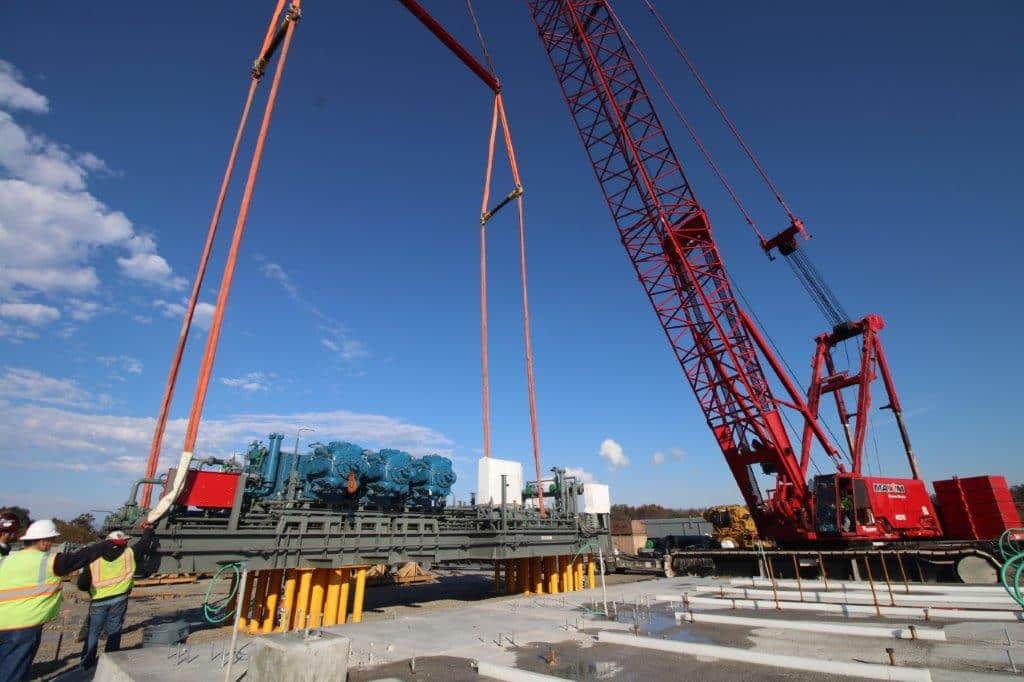
Crane services for BESS construction involve offloading equipment from transport, lifting it over or into a prepared site, and setting it precisely onto foundations, pads, or skids. The main components are battery enclosures or containers, power conversion system (PCS) skids, step-up transformers, switchgear, and supporting steel.
Each component carries its own lifting profile, which is why these projects are rarely a single repeated pick:
| Component | What the lift involves |
| Battery enclosures and containers | Container-sized and heavy, often set in long repetitive rows on tight pad spacing. |
| Power conversion skids (PCS) | Sensitive equipment set close to containers, where placement tolerance matters. |
| Step-up transformers | Among the heaviest single units on site, frequently calling for engineered rigging. |
| Switchgear and e-houses | Pre-assembled modules placed onto foundations as complete units. |
Repetition and tight tolerances mean cycle time, rigging, and consistency matter as much as raw lifting capacity.
Lifting BESS Units vs Batteries That Power Cranes: Clearing Up the Search Confusion
Search results for “crane for battery energy storage” mix two unrelated topics:
- Lifting and placing BESS equipment. Setting battery containers, skids, and transformers on a construction site. This is what this guide covers.
- Cranes powered by onboard batteries. Electric or hybrid machines that run on their own batteries. This is a different topic entirely.
If your project involves installing grid-scale storage, you need the first: a provider with the cranes, rigging, and engineering to set battery containers and transformers, not a battery-powered machine.
Why BESS Construction Is Accelerating Across the US
Battery storage is now one of the largest sources of new US generating-capacity additions. US developers plan to add 24 GW of utility-scale battery storage in 2026, up from a record 15 GW in 2025. More than 40 GW of US battery storage has been added over the last five years.
That growth is geographically concentrated. About 80% of 2026 additions are planned in just three states:
- Texas leads with 12.9 GW of planned 2026 additions.
- California is next at 3.4 GW.
- Arizona follows at 3.2 GW.
For contractors, storage work is both booming and clustered, which puts a premium on a lifting partner with coverage in those markets and the national footprint to follow projects elsewhere.
On an energy basis, the US installed a record 57.6 GWh of new storage in 2025, up 30% year over year and roughly four times the level of three years earlier. The market “has entered a new phase of sustained, high volume-deployments,” according to Iola Hughes, Head of Research at Benchmark Mineral Intelligence.
Storage rarely stands alone. It pairs with wind energy projects, solar, and increasingly with data center power infrastructure, each of which carries its own lifting demands across the same energy-transition build-out.
What Makes Battery Container and Transformer Placement Different From a Standard Lift
BESS placement differs from a routine pick because of four factors: precise final positioning, repetitive high-cycle sets, the weight of transformers and large enclosures, and ground conditions on partially built sites.


- Precise placement onto foundations. Containers and skids land on prepared pads with limited tolerance, often with conduit and connection points already staged.
- Repetition at scale. A single site can hold dozens or hundreds of enclosures, so consistent cycle time and rigging matter as much as peak capacity.
- Transformer weight and rigging. Step-up transformers are among the heaviest single components and often call for engineered rigging rather than a standard hook-and-sling pick. For more on that category and when a lift becomes critical, see what heavy rigging involves.
- Ground bearing and outrigger loads. BESS sites are frequently unfinished, so the surface under outriggers or crawler tracks has to carry concentrated loads safely.
These factors are why crane selection for storage is not a catalog decision. It depends on the weight of each unit at its lift radius, the reach over rows of equipment, the ground, and the site layout. Maxim Crane’s engineering services team evaluates those variables as part of lift planning, so the equipment matches the project rather than the other way around.
Choosing the Right Crane for a BESS Site: Wheeled vs Crawler Considerations
The right crane for a BESS site depends on unit weight, lift radius, ground conditions, and how much of the work repeats. In practice, three crane types do most BESS lifting: all-terrain, rough terrain, and crawler cranes.
- All-terrain cranes are road-capable and can be driven to the site, which suits offloading and placing containers on spread-out or multi-site projects. They combine highway travel with the ability to work on uneven ground, so they move easily between locations.
- Rough terrain cranes are compact and maneuverable on unfinished, uneven ground, and they are trailered to the jobsite. They have varying tonnage capacities depending on the make, model, and attachments used, and Maxim Crane’s rough terrain fleet ranges from 30 to 160 tons.
- Crawler cranes offer stability and reach for larger or repetitive sets and heavier picks. They have varying tonnage capacities depending on the make, model, and attachments used, and Maxim Crane’s crawler fleet ranges from 80 to 2,535 tons.
The choice between wheeled and crawler cranes usually comes down to mobility, ground footprint, and the size and repetition of the lifts:
| Consideration | Wheeled cranes (all-terrain, rough terrain) | Crawler cranes |
| Mobility to and around site | All-terrain drives on roads; rough terrain trailers in and maneuvers tight spaces. | Transported in pieces and assembled on site, then moves on tracks. |
| Ground footprint | Outrigger loads concentrated at set positions. | Tracks spread load and allow pick and carry. |
| Best fit | Offloading and spread-out or multi-site container sets. | Larger, heavier, or high-repetition picks needing reach and stability. |
Because the right answer depends on the specific lift, crane class is best confirmed during planning rather than assumed from a unit’s weight alone.
How Maxim Crane Supports BESS Construction Projects
Maxim Crane supports BESS construction as a lifting and placement partner, not just an equipment supplier. The company pairs a large, refreshed fleet, available with or without operating crews, with in-house engineering, rigging, hauling, and project management.
- For the heaviest units, engineered rigging provides gantry and specialized solutions to set transformers and large enclosures.
- Moving oversized, container-sized components to the site is its own challenge, which is where heavy hauling for over-dimensional loads comes in.
- Crews and equipment together, through operated and maintained rentals, give project teams a single accountable lift rather than a bare machine to staff themselves.
- On multi-stakeholder energy builds, project management coordinates the lift sequence across the schedule.
Maxim’s role on large, multi-crane jobs is documented across its project case studies. On a major manufacturing facility build in Arizona, one of the top-three battery storage states, Maxim supplied a full range of tower, all-terrain, rough terrain, and crawler cranes for a single project, coordinated through one point of contact.
“I have one point of contact that I bring our needs to,” said Isaac Brown of Hoffman Construction, describing how that contact takes project information to Maxim’s in-house engineering team to develop the plans. That single-point model fits storage work, where the lift sequence and engineering stay aligned.
With more than 50 locations across five US regions and ISO 9001, 14001, and 45001 certifications, Maxim brings coverage in the Texas, California, and Arizona markets where most storage capacity is landing, backed by a zero accident safety philosophy.
Frequently Asked Questions About Crane Services for BESS Construction
What crane is needed to install a battery energy storage (BESS) project?
It depends on unit weight, lift radius, ground conditions, and site layout. Most BESS installations use all-terrain, rough terrain, or crawler cranes, selected once the weight of each unit at its placement radius is known. Because container weights and pad spacing vary by project, crane class is decided during lift planning rather than from a catalog.
How much does a battery container or Megapack weigh, and how does that affect crane selection?
A single Tesla Megapack 2 XL weighs up to 84,000 lb, about 42 US tons. Weight alone does not set the crane, though. What matters is that weight at the lift radius, plus ground conditions, which together determine the required capacity and the crane type.
What is the difference between an operated lift and a bare crane rental for BESS work?
A bare rental provides the crane only, and the contractor supplies the operator and crew. An operated and maintained rental provides the crane with operating crews, so the lift is delivered as a service. For repetitive, high-cycle BESS sets, an operated approach gives project teams a single accountable lift.
How are ground bearing pressures and outrigger loads handled on a BESS site?
BESS sites are often unfinished, so the surface under outriggers or crawler tracks has to carry concentrated loads. These loads are reviewed during lift planning, where the lift radius, crane configuration, and supporting surface are considered together. Crawler cranes spread load across their tracks, while wheeled cranes concentrate it at outrigger positions.
Mobile crane or crawler crane for a BESS site: which fits which footprint?
Wheeled cranes such as all-terrain and rough terrain models suit offloading and spread-out or multi-site sets, and all-terrains can drive between locations. Crawler cranes suit larger, heavier, or high-repetition picks where stability and reach matter most. The right choice comes down to unit weight, reach, ground conditions, and how much of the work repeats.
Looking for a Lifting Partner for Your Storage Project?
Battery storage construction rewards planning the lift before the equipment shows up. If you have a BESS project on the schedule, Maxim Crane can help match the right cranes, rigging, and crew to the site. Request a quote from Maxim Crane to discuss your project requirements.
