

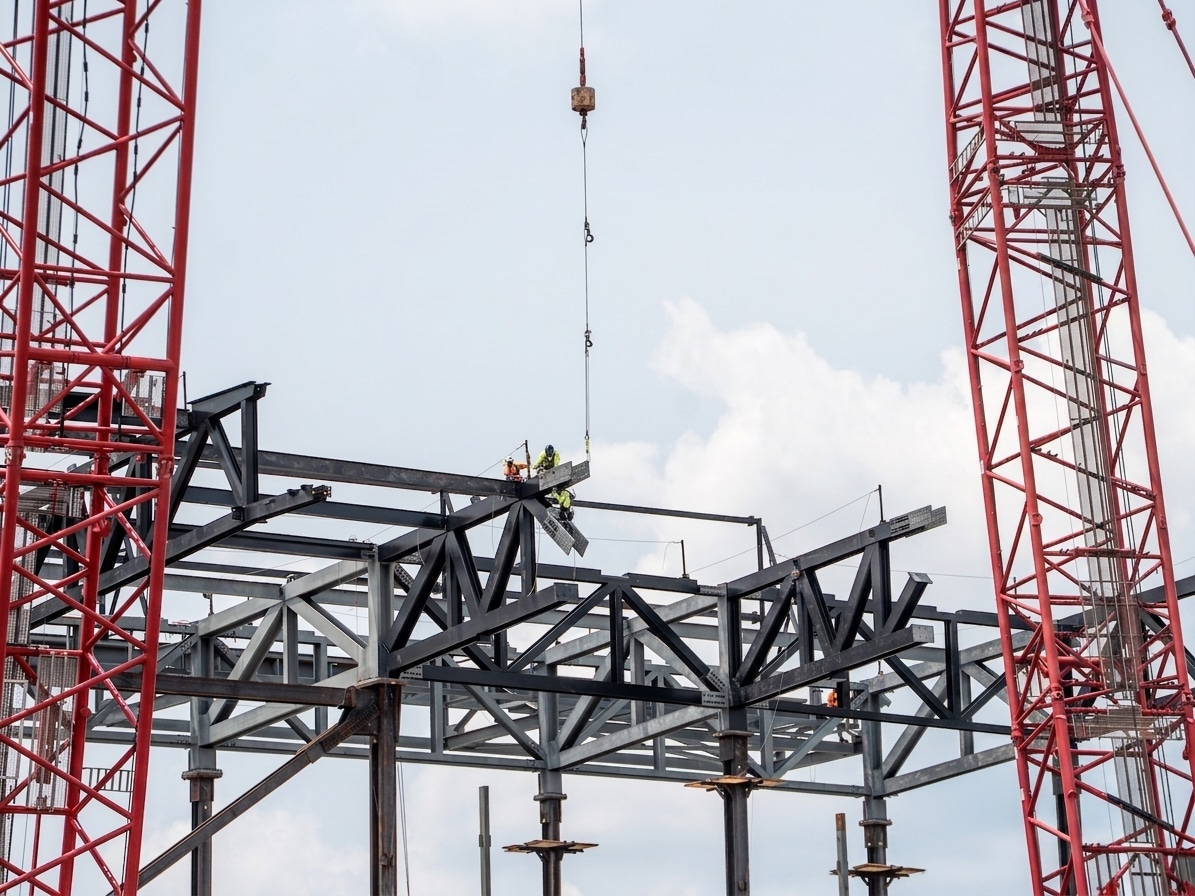
Putting up structural steel is one of the most demanding phases on any commercial or industrial jobsite, and the crane you pick shapes how safely and quickly the frame goes up. Selecting a crane for steel erection depends on the structure, the sequence, the site, and the weight of every member you plan to set.
Key Takeaways
- The right crane for steel erection is the one matched to member weight, lift radius, structure height, site access, and the erection sequence, not simply the largest machine on the lot.
- Crawler cranes handle heavy, tall structural steel and stay productive on uneven ground, while all-terrain and hydraulic truck cranes trade ultimate capacity for mobility and faster setup.
- Capacity at radius matters more than peak rated capacity: a crane rated for hundreds of tons close in may lift only a fraction of that out at the reach a steel pick actually requires.
- Steel erection is governed by OSHA 29 CFR 1926 Subpart R, which requires a site-specific erection plan and gives the crane operator authority to stop any lift when safety is in doubt.
- An engineering-led partner that pairs the right machine with a lift plan reduces schedule risk across multi-phase steel jobs more than a rental sourced on capacity alone.
Why Steel Erection Is Its Own Lifting Discipline
Steel erection is a distinct lifting discipline because the crane has to set precise structural members in a fixed sequence while crews connect them at height. Each beam, column, and girder has to land in the right place, in the right order, for the structure to stand.
That sequencing is also a federal requirement. Steel erection falls under OSHA 29 CFR 1926 Subpart R, which mandates a site-specific erection plan, qualified riggers, and a defined construction sequence. The regulation is also explicit about who controls a questionable lift: the operator has the authority to stop and refuse to handle loads until safety has been assured. The work is handled by a skilled, specialized trade, with structural iron and steel workers earning a median annual wage of $62,700 in May 2024 across about 85,100 ironworker jobs. Coordinating that crew with the crane is part of why steel erection rewards planning over improvisation.
What Determines the Right Crane for a Steel Project
The right crane for a steel project is determined by five factors working together: member weight, lift radius, structure height, site access, and the erection sequence. No single factor decides the machine. They have to be weighed as a set, because a change in one often forces a change in another.


These are the variables that drive the selection:
- Member weight: The heaviest individual beam, column, or pre-assembled section sets the floor for required capacity. A single transfer girder can outweigh dozens of typical members.
- Lift radius and reach: Steel often has to be set well away from where the crane can stand, and capacity drops sharply as the load moves out, so reach frequently matters more than peak rating.
- Structure height: Tall frames demand the boom and tip height to set top-level steel, and a tower or high-rise frame changes the equation entirely.
- Site access and ground conditions: Tight urban lots, soft or uneven ground, and limited laydown space all narrow which machines can be positioned.
- Erection sequence: The order of the lifts dictates where the crane sits, how often it relocates, and whether one machine can cover the job or several are needed across phases.
Reading those factors together is where projects get won or lost on schedule. For a wider look at how different project types shift these priorities, the guide to crane selection and applications walks through the broader decision framework this post applies to structural steel.
Crane Types Commonly Used for Structural Steel Erection
The cranes most often used for structural steel erection are crawler cranes, all-terrain cranes, and hydraulic truck cranes, each suited to a different mix of capacity, reach, and mobility. Tonnage varies by make, model, and attachments, so the ranges below reflect Maxim Crane’s published fleet rather than a universal standard.
Crawler Cranes for Heavy and Tall Steel
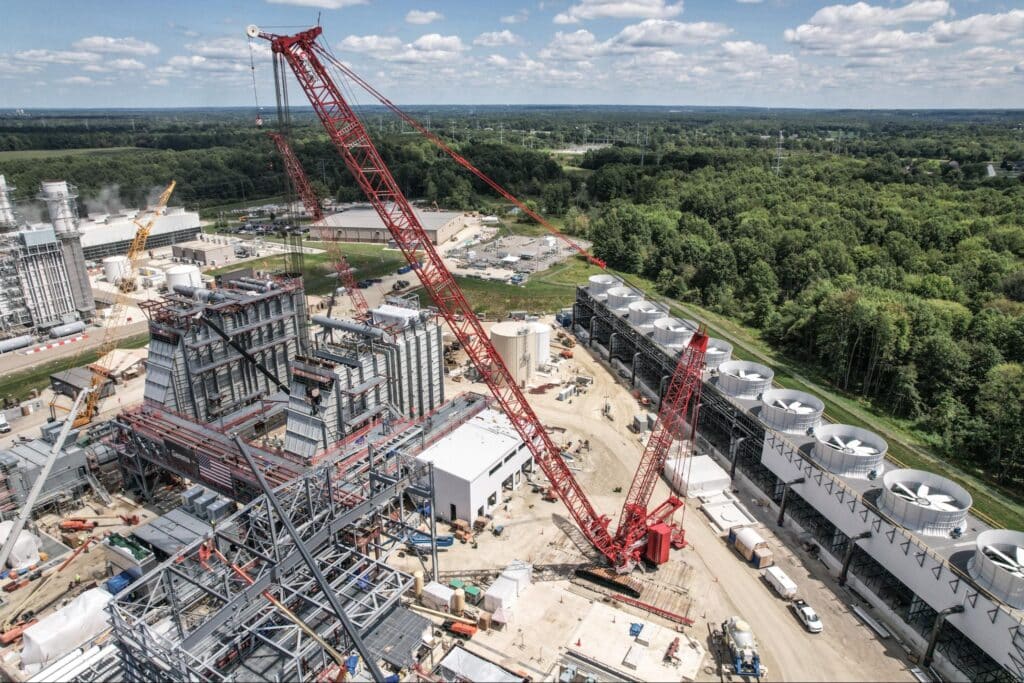
Crawler cranes are the workhorse for heavy structural steel and tall frames. Mounted on tracks rather than tires, they can pick and carry loads, stay stable on uneven ground, and deliver high capacity at the long radii steel erection often requires. Crawler cranes have varying tonnage capacities depending on make, model, and attachments. Maxim Crane’s crawler fleet ranges from 30 to 2,535 tons, covering everything from mid-rise commercial frames to large stadium and infrastructure steel.
All-Terrain Cranes for Reach With Mobility
All-terrain cranes pair highway travel with strong lifting capacity, a fit for steel jobs that need substantial reach without a crawler’s setup time. They drive to the site on roads, then handle rough jobsite ground once they arrive. All-terrain cranes have varying tonnage capacities depending on make, model, and attachments. Maxim’s all-terrain fleet ranges from 40 to 900 tons, giving steel erectors a mobile option for many mid-to-large frames.
Hydraulic Truck Cranes for Faster Setup
Hydraulic truck cranes are built for quick mobilization and versatile lifting on accessible sites. When a steel job needs a capable machine on the ground fast and the picks fall within range, they keep the schedule moving. Hydraulic truck cranes have varying tonnage capacities depending on make, model, and attachments. Maxim’s hydraulic truck crane fleet ranges from 40 to 100 tons. On larger structural work, these machines frequently support a crawler rather than carry the heaviest picks. Many steel jobs use more than one type at once: a crawler sets the primary steel while a more mobile crane handles secondary members and staging.
Why Capacity at Radius Decides the Lift, Not Peak Rating
Capacity at radius decides a steel lift, because a crane’s rated capacity applies only at its shortest working radius and falls as the load moves outward. A machine advertised at several hundred tons close in may safely lift only a fraction of that once the boom is extended to reach steel across a building footprint.
This is why peak tonnage on its own is a poor way to pick a crane for steel. The real question is how much the machine can lift at the radius, boom length, and configuration the job requires. Working that out against a specific erection plan is part of the engineering behind any well-run steel project, and the How Project Type Influences Construction Crane Selection post covers how these capacity tradeoffs change from one kind of build to the next.
How an Engineering-Led Partner De-Risks Steel Erection
An engineering-led crane partner reduces risk on steel erection by matching the right machines to a site-specific lift plan before the first beam is set, then supporting the lifts through every phase. With a regulated, sequence-dependent discipline like steel, that planning is what keeps the schedule and the crew safe.
Maxim Crane brings that planning in-house, so the crane is chosen for the job rather than the job worked around the crane. Its capabilities span the full arc of a structural steel project:
- Engineering services: custom lift plans, equipment selection, foundation and ground bearing requirements, and jobsite drawings that match the machine to the structure and sequence.
- Engineered rigging solutions: for lifts beyond a standard hook-and-pick, systems such as gantries and jack-and-slide extend what is possible on complex placements.
- Project management support: coordination that runs from planning through on-site execution across every phase of a multi-phase steel job.
- Operated and maintained rentals: equipment supplied with or without operating crews, so lifting capability scales as the frame rises.
For steel-framed buildings specifically, Maxim’s commercial construction crane rental services are built around exactly this kind of work.
The scale of that capability shows up on flagship structural projects. On the Mercedes-Benz Stadium build, Maxim assisted with planning and engineering on a structure featuring a 14.5-acre retractable roof, and the project logged 72,618 machine hours without a major incident.
That reliability is what partners point to. Reflecting on the relationship with Maxim, Mike Herrmann, Senior Superintendent at Layton Construction, put it simply: “It’s a one call deal and the job is done. I get the equipment I need.”
Frequently Asked Questions About Cranes for Steel Erection
What type of crane is used for steel erection?
Crawler cranes, all-terrain cranes, and hydraulic truck cranes are the types most commonly used for steel erection. Crawler cranes are often the first choice for the heaviest and tallest structural steel, while all-terrain and hydraulic truck cranes offer more mobility and faster setup for lighter or more accessible picks. Many projects use a combination across different phases of the frame.
How do I choose the right crane for my steel project?
Choosing the right crane starts with the heaviest member, the radius the lifts require, the structure height, the site conditions, and the erection sequence, evaluated together rather than one at a time. Because capacity drops with reach, the decision hinges on what a machine can lift at the actual working radius, not its peak rating. This is the kind of analysis Maxim Crane’s engineering services team performs as part of lift planning.
What does it cost to rent a crane for steel erection?
Crane rental cost for steel erection depends on the crane type and capacity, the project duration and number of phases, mobilization, and whether the rental includes operating crews. Because every steel job has a different scope and sequence, pricing is project-specific. Our post on budgeting crane rental for multi-phase projects explains what drives the numbers, and you can contact Maxim Crane for an estimate tailored to your structure.
Why is steel erection treated as a regulated, high-stakes process?
Steel erection is regulated under OSHA 29 CFR 1926 Subpart R because setting structural members at height carries serious risk and demands tight coordination. The standard requires a site-specific erection plan and a defined construction sequence, and gives the operator authority to halt any lift when safety is in question. That regulatory weight is a large part of why an experienced, engineering-led lifting partner matters on steel work.
Plan Your Next Steel Erection Lift With Maxim Crane
Structural steel rewards getting the crane right the first time, matched to the members, the reach, and the sequence your project demands. Maxim Crane pairs a large, versatile fleet with in-house engineering to put the right equipment in the right place at the right time. Request a quote from Maxim Crane to discuss the crane and lift plan for your next steel erection project.
