

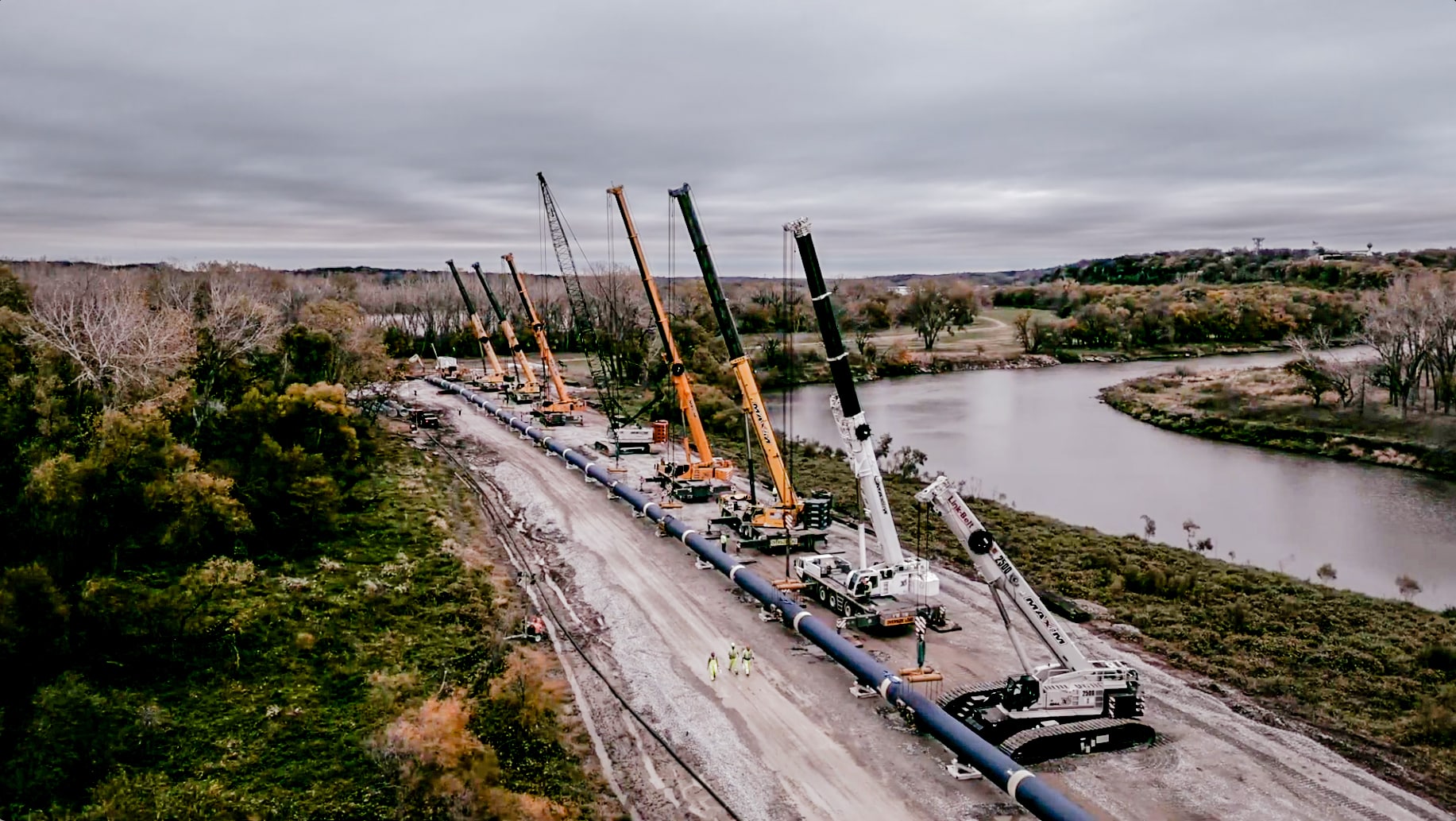
Maxim Crane is widely recognized for its nationwide footprint and premier crane rental solutions, but its value extends well beyond fleet size and heavy-lift capability. Large-scale construction, industrial, and infrastructure projects demand precise planning—selecting the right crane, engineering efficient lift plans, and optimizing rigging configurations can make or break a schedule. To meet these technical challenges, Maxim Crane supports customers by also offering a dedicated, in-house engineering team that combines hands-on field experience with modern planning tools like computer-aided design (CAD) and 3D modeling. This article explores what sets Maxim Crane’s engineering services apart, the process behind its planning-to-execution support, and how engineered lift solutions help turn complex lifting operations into smooth, successful projects.
What Are Maxim Crane’s Engineering Services and What Sets Them Apart
Maxim Crane integrates engineering capabilities directly into its crane operations, giving customers a single, coordinated resource for both lifting equipment and the technical planning behind it. Backed by decades of heavy-lift and construction experience, its in-house engineering team develops project-specific solutions that align crane selection, lift planning, rigging design, and compliance documentation—then stays involved through execution when field conditions change.
Deep Industry Knowledge Built Into Every Plan
With extensive experience in crane rental and heavy-lift services, Maxim Crane’s engineers understand both equipment capabilities and real-world jobsite constraints. This background helps them create lift strategies that account for variables like load characteristics, site access, clearances, ground conditions, and sequencing.
Comprehensive Engineering Services (From Planning to Onsite Support)
Maxim Crane’s engineering team provides a full suite of services designed to support lifting operations:
- Custom Lift Planning: Project-specific lift plans that consider spatial constraints, load paths, movement arcs, crane configurations, and site logistics.
- Engineered Rigging Solutions: Custom rigging designs for challenging loads, including sling angle analysis, attachment point selection, and support strategies suited to unusual geometries and restricted environments.
- Advanced CAD and 3D Modeling: Detailed CAD layouts and 3D modeling/simulations that visualize crane placement, obstructions, and multi-crane coordination—helping teams identify conflicts early and refine the plan before the lift.
- PE-Stamped Plans for Compliance: Professional Engineer (PE)-signed and sealed (stamped) drawings and calculations, including load calculations and rigging diagrams, to meet, and client submittal needs.
- Responsive Engineering Support: Near real-time engineering support to help adjust lift plans, rigging approaches, or crane configurations as project conditions evolve—helping keep the lift aligned and on schedule.
Why This Approach Is Different: End-to-End Coordination
Because Maxim Crane’s engineering services are in-house and closely tied to its equipment and operations teams, planning and execution stay tightly aligned. This end-to-end coordination streamlines communication, speeds decision-making, and helps prevent the delays that can occur when engineering, equipment, and field crews are managed through separate vendors.
Maxim Crane’s Engineering Process: From Planning to Execution
Maxim Crane follows a structured process to promote successful project outcomes, combining thorough preparation with responsive onsite support.


1. Initial Consultation
The process begins with gathering project goals, technical requirements, and site-specific constraints. This phase clarifies elements such as load specifications, spatial layouts, and environmental conditions.
2. Site Assessment and Analysis
Engineers perform a site assessment to identify constraints and opportunities — typically led by the project team and informed by engineering input as needed. This evaluation covers crane placement, potential obstructions, and ground conditions, forming the foundation for a reliable lift plan.
3. Development of Detailed Lift Plans
With the consultation and site assessment complete, the team formulates comprehensive detailed lift plans. These plans feature CAD-generated layouts, 3D simulations, and technical calculations that facilitate proper alignment with load paths and rigging methods. PE-stamped documentation is also prepared to satisfy regulatory standards.
4. Collaborative Plan Review
Before execution, the lift plans are reviewed with stakeholders such as contractors, architects, and site supervisors. This collaborative review helps verify that the plan is fully aligned with project needs and accommodates any final adjustments.
5. Execution and Onsite Adjustments
When unexpected developments arise during the lift, Maxim Crane’s engineering team is available to support the field crew remotely — refining rigging calculations or recommending adjustments to crane configurations as needed. This responsiveness is a key component of Maxim Crane’s project-specific lift plans.
Real-World Engineering in Action
From specialty tandem lifts to multi-year stadium builds, Maxim’s in-house engineers help crews solve real constraints with detailed lift planning, engineered rigging, and technology-enabled visualization.
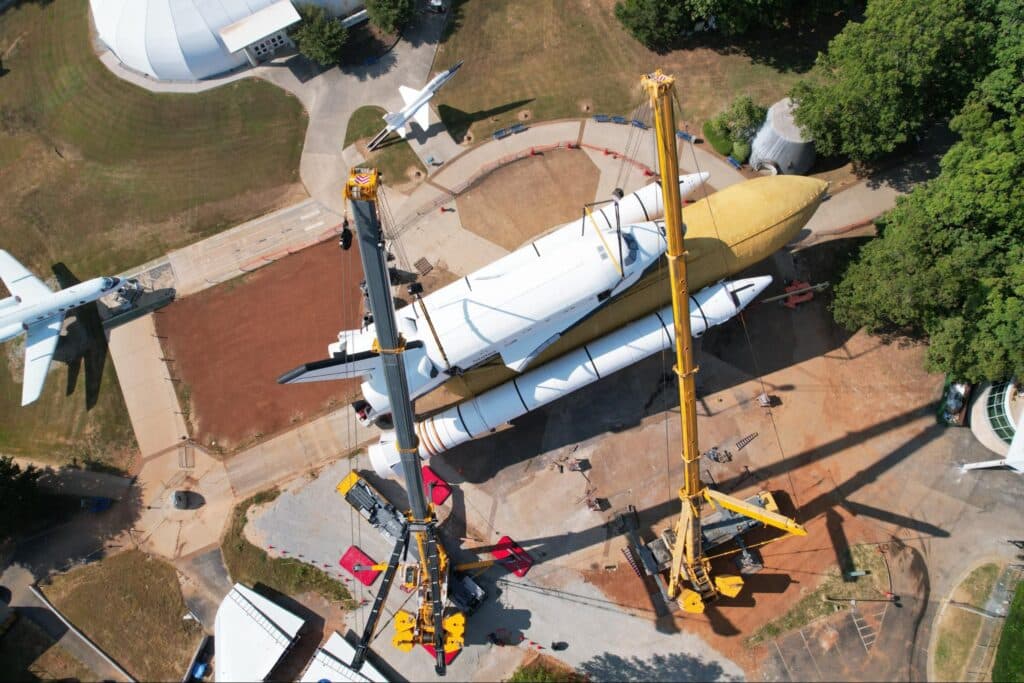
Case Study: Space & Rocket Center (Huntsville, Alabama) — Reinstalling the Pathfinder Shuttle Replica
When the U.S. Space & Rocket Center needed the Pathfinder shuttle replica re-installed onto its rocket boosters, Maxim Crane executed a highly coordinated tandem lift using a Liebherr LTM 1750-9.1 and Liebherr LTM 1400-7.1. The engineering challenge wasn’t simply “picking enough crane”—it was verifying the rigging, crane positions, and clearances worked precisely from start to finish for an iconic load.
Key challenges solved through engineering
- Tight turnaround time: Maxim notes the project moved quickly from award to execution, requiring the engineering team to “jump right on” designing the lift approach.
- Custom rigging and lifting interface: The in-house team engineered the lifting lugs, getting them designed, fabricated, and delivered to the jobsite for execution.
- Clearance and placement verification: Engineers used 3D technology to evaluate crane locations and check clearances between the boom, the load, and the stand, supported by traditional CAD review as well.
- Crew alignment through a detailed lift plan: The team emphasized the importance of a detailed lift plan so everyone understood how the lift would start, progress, and finish.
Case Study: Mercedes-Benz Stadium (Atlanta, Georgia) — Large-Scale Coordination Over a Multi-Year Build
Stadium projects are a different kind of engineering test: long durations, multiple contractors, changing site conditions, and repeated critical lifts that must be executed consistently. On the Mercedes-Benz Stadium project, Maxim Crane supported construction over three years, providing a large mix of crane classes and assisting with planning and engineering throughout.
Key challenges solved through engineering
- Scale and variety of lifts: Maxim provided 24 cranes ranging from 40 to 2,535 tons, indicating a wide spread of lift needs as construction progressed.
- Planning-led execution at high volume: The case study notes over 72,618 machine hours completed without major incident, reflecting the impact of disciplined planning, engineered lift execution, and coordination across the project team.
- Complex project environment: With a retractable roof spanning 14.5 acres, a multi-year schedule, and numerous moving parts, planning and engineering support helped match lift solutions to evolving jobsite requirements.
Benefits of Engineering-Driven Lifting Solutions
Partnering with a crane provider that integrates in-house engineering offers several key advantages:
- Streamlined Coordination: In-house engineering capabilities create a unified source for both planning and equipment, simplifying communication and reducing external dependencies.
- Time and Cost Efficiency: Detailed planning and thorough simulations may reduce unexpected delays and disruptions,
- Responsive Support: When project conditions warrant it, Maxim Crane’s engineering team can be engaged to help address unforeseen challenges before they escalate — with the scope and availability of support tailored to each project.
- Comprehensive Documentation: Centralized management of PE-stamped plans, load charts, and rigging diagrams simplifies compliance and supplies a solid reference for future work.
- Enhanced Precision: The integration of advanced technologies and professional insights leads to highly accurate, custom-tailored solutions that optimize performance.
Frequently Asked Questions (FAQs)
What types of engineering services does Maxim Crane provide?
Maxim Crane’s in-house engineering team supports projects with custom lift planning, engineered rigging solutions, CAD layouts and 3D modeling/simulations, crane selection and configuration support, ground/load-related calculations as required, and responsive engineering support — available on a project-by-project basis — to help keep execution aligned with the plan as conditions change.
Can you provide engineering documentation (e.g., lift plans, PE-stamped drawings) for permitting?
Yes. Maxim Crane can produce project-specific lift documentation and, when required, Professional Engineer (PE)-stamped drawings and calculations to support owner, contractor, and permitting/submittal requirements. Documentation can include items such as lift plans, rigging diagrams, and calculation packages tailored to the project scope.
What are the benefits of using an in-house engineering team vs. third-party engineers?
An in-house team enables tighter coordination between engineering, fleet selection, and field execution. That typically means faster iterations on plans and models, fewer handoffs, and clearer alignment between what’s designed and what will be executed—especially when equipment availability, site constraints, or sequencing needs shift during the planning cycle.
How early should I involve engineering in my project planning?
Involve engineering as early as possible—ideally during preconstruction or as soon as you know the critical pick details (approximate loads, set locations, access constraints, and schedule windows). Early involvement gives more time to evaluate crane options, evaluate setup feasibility, and develop documentation without compressing timelines later.
How do engineering services help improve project efficiency and schedule reliability?
Engineering-driven planning helps teams select the right crane configuration sooner, validate geometry and clearances through CAD/3D modeling, and coordinate sequencing and site logistics before mobilization. That reduces last-minute redesigns, prevents avoidable downtime, and helps keep the lift plan aligned with the overall construction schedule.
What information should I have ready to start an engineering review?
Helpful inputs include load weights and dimensions, pick/set locations, required radii/heights, available setup areas, site drawings (civil/structural if applicable), known obstructions, access/traffic constraints, and the target schedule. If some details are still evolving, the engineering team can often begin with preliminary assumptions and refine as the project is finalized.
Elevate Your Project with Maxim Crane’s Engineering Services
Maxim’s Engineering services can transform complex lifting challenges into well-orchestrated projects. Ready to elevate your project with Maxim Crane’s tailored engineering solutions? Contact Maxim Crane today to discover how their engineering team can drive your next project to success.
