

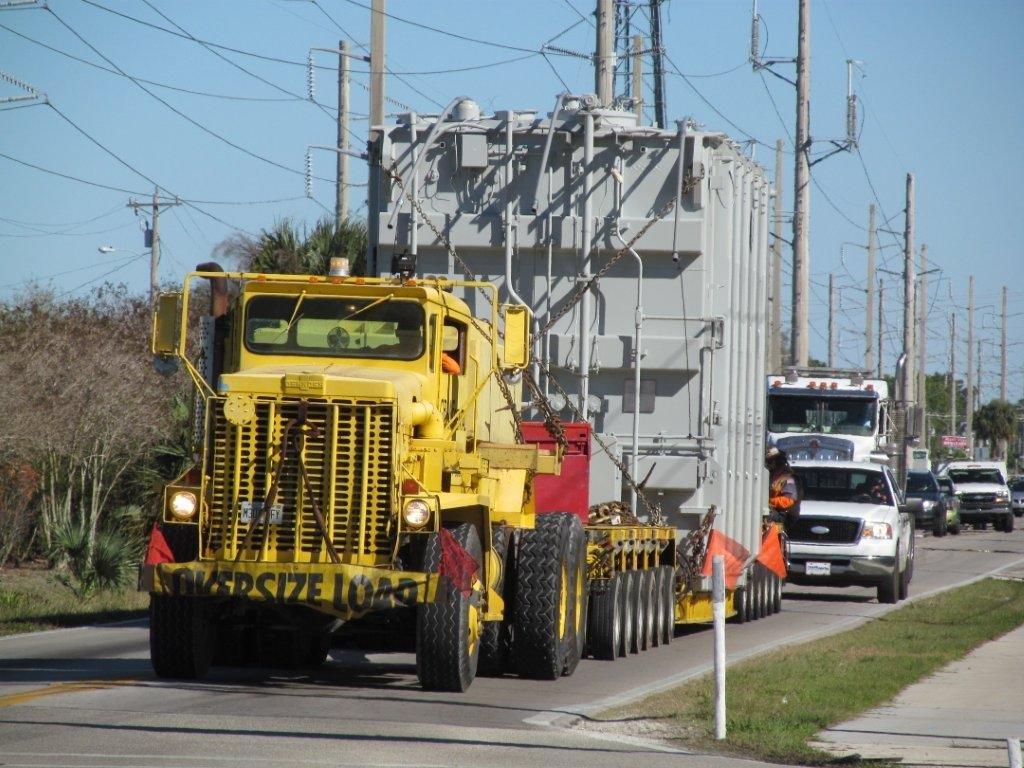
Setting a power transformer at a substation is one of the higher-stakes lifts in heavy construction. The unit can take years to procure, the site is often tight and partly energized, and the set has to land clean and on schedule. A transformer setting crane is only one part of the picture, alongside heavy haul of the unit, ground bearing and site staging, outage-window timing, and engineered rigging.
Key Takeaways
- Setting a transformer is a project-level lift, not just a pick. It spans heavy haul of the unit, ground bearing and site staging, outage-window timing, engineered rigging, and crane selection.
- Crane and method selection depend on the transformer’s weight, the required reach and radius, the ground’s bearing capacity, site clearances, and the outage window. There is no default answer.
- Three methods cover most substation work: mobile crane, hydraulic gantry, and jack-and-slide. Gantry and jack-and-slide handle confined or low-clearance sites where a conventional crane is impractical.
- Large power transformer lead times are commonly quoted at 36 months and reach as much as 60 months, so a clean, on-time set protects a scarce, long-lead asset.
- U.S. electricity demand is growing about 1.7% per year through 2026 after nearly two decades flat, driving substation and transformer work alongside data center and manufacturing growth.
- Maxim Crane pairs a large, versatile fleet with engineering, engineered rigging, heavy hauling, and project management to handle substation and transformer projects coast to coast.
Why Substation and Transformer Projects Are Accelerating
Substation and transformer work is rising because U.S. electricity demand is climbing after a long flat stretch, and the grid is expanding to keep up. Electricity consumption is growing about 1.7% per year from 2020 through 2026 after being essentially flat for nearly two decades, with most of the growth coming from the commercial sector, which includes data centers, and the industrial sector, which includes manufacturing.
To keep that system balanced and reliable, utilities are expanding networks of high-voltage transmission lines. More transmission and more load mean more substations, more transformers, and more heavy lifts to set them in place.
The connection is direct. The same demand driving new data center construction and semiconductor plants is driving grid work. Those facilities need power, and the power needs substations and transformers set on their foundations. The fabs and data centers need the grid, and the grid needs the lift.
How Are Transformers Set at a Substation?
Setting a transformer at a substation means moving a very heavy, oversized unit into an exact position on its foundation, often inside a tight, partly energized site and within a fixed outage window. The pick itself is brief. The work around it, transport, staging, ground preparation, rigging, and crane positioning, is what makes it complex.


That full scope is why substation transformer work reads as a managed project rather than a single lift:
- Heavy haul of the unit: large power transformers are oversized, overweight loads that travel on specialized trailers, not standard trucks. Getting the unit to the pad is its own engineered move, which is where heavy hauling comes in.
- Site staging and ground bearing: the crane, the trailer, and the load all impose heavy point loads on the ground. Lift planning and engineering evaluate ground bearing, crane position, and load paths before anything moves.
- Outage-window coordination: substation work often happens during a scheduled outage, so the set has to fit a fixed window with little room to slip.
- Engineered rigging: the unit is rigged to protect it and to control the pick, using a method matched to the site and the clearances around the pad.
- Crane and method selection: weight, reach, clearances, and access determine which crane or rigging method fits, which is the next decision below.
What Determines the Right Crane and Method for a Transformer Lift?
The right crane and method come down to the transformer’s weight, the reach and radius from where the crane can set up, the ground’s bearing capacity, site clearances, and the outage window. There is no single answer, which is why crane selection on substation projects is an engineering decision rather than a default choice.
A handful of factors drive that decision:
- Weight and rated capacity: the unit’s weight, plus rigging, has to sit well within the crane’s rated capacity at the working radius.
- Reach and radius: how far the crane must reach from its setup position to the foundation, which sharply affects what it can pick.
- Ground bearing: whether the ground, or engineered mats, can carry the crane and load without settling.
- Site clearances: overhead lines, energized equipment, and congestion around the pad.
- Outage window: how much time the set has to be completed once the area is de-energized.
Maxim Crane’s engineering services team evaluates these factors as part of lift planning, and the fleet ranges from all-terrain cranes for over-the-road mobility between distributed sites to crawler cranes for high-capacity, long-reach sets.
For the set itself, three methods cover most substation and transformer work. They differ less in capacity than in how and where they can operate.
| Method | Best suited for | How it lifts |
| Mobile crane | Open or moderately tight sites with overhead clearance and room to set up. | Lifts from above using the crane’s boom, sized against the load chart at the working radius. |
| Hydraulic gantry | Space-constrained sites where a conventional crane is impractical, and major component replacement. | Lifts from above with a gantry frame instead of a boom, useful where there is no room to position a crane. |
| Jack-and-slide | Tight spaces and limited overhead clearance. | Lifts from underneath with hydraulic jacks, then slides the load along a track into position. |
Maxim Crane’s engineered rigging services cover gantry and jack-and-slide methods for confined or low-clearance substations, so the same partner can switch approaches when the site calls for it instead of a conventional pick.
Why Transformer Lead Times Raise the Stakes on the Set
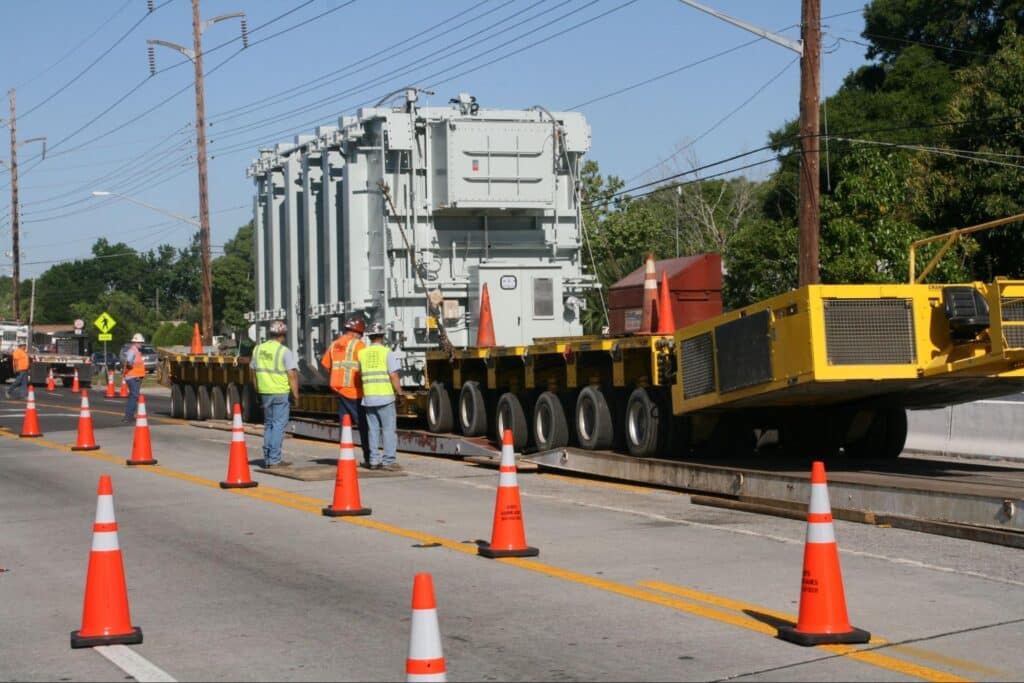
Because the transformer itself is scarce and slow to replace, a damaged or delayed set carries outsized consequences. Lead times for large power transformers are commonly quoted at 36 months and reach as much as 60 months, which makes the unit a scheduling constraint long before it reaches the pad.
These units are also formally treated as critical. Large power transformers are essential components of the electric power transmission and distribution grid, and a U.S. Department of Energy report to Congress frames the stakes plainly: “The susceptibility of LPTs to emerging threats and hazards, combined with their extended replacement lead times, presents significant challenges to grid reliability and resilience” (U.S. Department of Energy, Large Power Transformer Resilience Report to Congress, July 2024).
The takeaway for the lift is simple. When the asset on the hook took years to build and cannot be quickly replaced, a clean, well-engineered, on-time set is the goal, which is the case for matching the right crane, the right rigging, and a coordinated heavy haul to the job from the start.
Why Substation Lifts Call for a Project-Managed Lifting Partner
Because a substation set combines a scarce load, an energized site, and a fixed schedule, it favors a single partner who can plan and execute the whole scope rather than stitch together separate vendors. Maxim Crane handles crane rental, engineering, engineered rigging, heavy hauling, and project management under one roof, with operated and maintained rentals available with or without operating crews.
Maxim Crane is the only coast-to-coast provider of comprehensive lifting services in the United States, and its infrastructure and industrial crews support grid, power, and heavy electrical projects nationwide. A few credentials back that up:
- Reach: more than 50 locations across five regions, with a large, versatile, refreshed fleet.
- Certifications: ISO 9001 (quality), ISO 14001 (environmental), and ISO 45001 (occupational health and safety).
- Safety record: a zero accident safety philosophy, the SC&RA Crane & Rigging Group Safety Award in 2024, and a record-low Total Recordable Incident Rate that year.
On a recent infrastructure project, MasTec Civil area manager Jeff Anderson described the partnership this way: Maxim Crane “contributes to every civil contractor that has a need for heavy lifting, heavy hauling, engineering,” adding that he recommends Maxim “to anybody who asks.” That single-partner model is what keeps a substation set from becoming a coordination problem. See that partnership in action: Maxim Crane supporting MasTec Civil on a heavy infrastructure lift at the Nashville airport.
Frequently Asked Questions About Substation and Transformer Cranes
How much does a substation transformer weigh?
Large power transformers are among the heaviest single pieces of equipment delivered to a jobsite, heavy and oversized enough to require specialized heavy-haul transport rather than standard trucking. Exact weight varies widely by voltage class and design, so the unit’s weight is confirmed from the manufacturer’s data and built into the lift plan rather than estimated.
Why are large transformers shipped stripped or without oil?
Large power transformers are commonly drained and shipped without oil, with the main tank filled with dry air or nitrogen for transport, to reduce weight and meet road and bridge limits. Bulky external components such as bushings and radiators are often removed and shipped separately for the same reason. The unit is then reassembled, refilled, and processed on site before it is energized.
What is a generator step-up (GSU) transformer?
A generator step-up transformer raises a power plant generator’s output voltage to transmission levels so power can travel long distances over the grid. GSU units are large, critical, and long-lead, which puts the same premium on a clean, well-planned set.
What is a critical lift in substation and transformer work?
A critical lift is generally a lift flagged for elevated risk, for example a high-value or hard-to-replace load, a pick near the crane’s rated capacity, a multi-crane lift, or work over energized or occupied areas. Critical lifts receive additional engineering review and planning, which is why substation transformer sets are usually handled as critical lifts.
Plan Your Substation or Transformer Lift With Maxim Crane
Substation and transformer projects reward early planning and a partner who can carry the full scope, from heavy haul to the final set. If you have a transformer set or grid infrastructure lift on the schedule, request a quote from Maxim Crane to talk through crane selection, rigging, and heavy haul for your site.
