

Before a crane ever picks a load, it has to be carried by something far less visible than the boom or the counterweights: the ground beneath it. Ground bearing pressure decides whether that ground can support the crane safely, and getting it wrong is one of the fastest ways a routine lift turns into a serious incident. For the general contractor, project manager, or site engineer who owns the lift, understanding what the ground has to handle is where every safe lift begins.
Key Takeaways
- Ground bearing pressure is the load a crane and its supports impose on the ground, expressed as force over area. If it exceeds what the ground can carry, the crane can settle, shift, or tip.
- Ground bearing pressure and soil bearing capacity are not the same. One is the demand the crane places on the ground; the other is the ground’s ability to resist it. A safe setup keeps demand below capacity.
- Federal regulation prohibits assembling or using a crane unless the ground is firm, drained, and graded enough to meet the manufacturer’s support and level specifications, a requirement set in OSHA 1926.1402.
- Responsibility for adequate ground conditions rests with the controlling entity, often the general contractor, who must also disclose known subsurface hazards such as voids, tanks, and utilities under the same OSHA standard.
- Crane mats, cribbing, and outrigger pads are recognized supporting materials that spread the load over a larger area to bring ground bearing pressure within safe limits.
- Assessing ground bearing pressure and preparing a site is specialized engineering work, not a field estimate, which is why complex or heavy lifts call for engineering support.
What Is Ground Bearing Pressure?
Ground bearing pressure is the load a crane transfers to the ground through its outriggers, pads, or tracks, measured as force per unit area, such as pounds per square foot. Every crane setup imposes a specific pressure, and that ground has to carry it without failing.
A crane concentrates enormous weight, the machine plus its counterweights and the load, onto a relatively small contact area. The smaller that area, the higher the pressure on the ground below.
Ground Bearing Pressure vs. Soil Bearing Capacity
Ground bearing pressure and soil bearing capacity describe two sides of the same equation, and a lift is stable only when the pressure stays below the capacity:
- Ground bearing pressure: the demand. The force per unit area that the crane, its counterweights, and the load impose on the ground through outriggers or tracks.
- Soil bearing capacity: the supply. The maximum pressure the ground can carry before it deforms or fails, which varies with soil type, moisture, compaction, and what lies beneath the surface.
Why Ground Bearing Pressure Matters for Every Crane Lift
Ground bearing pressure matters because the ground is a primary stability factor for any crane. If the surface cannot carry the imposed load, an outrigger can punch through, a track can settle unevenly, and the crane can drop out of level or tip, risking the crew, the load, and the site.
An industry guidance note from the Crane Industry Council of Australia and the Crane Association of New Zealand frames the principle plainly: “Crane stability often depends on the integrity of the ground on which it stands.” That line, from their guidance on crane stability and ground pressure, captures the point: the crane can be rated and the rigging correct, but if the ground gives way, none of that holds.
When the ground cannot handle the pressure a crane imposes, the failure modes are well understood:
- Outrigger punch-through: a float or pad pushes into soft or hollow ground, dropping one corner of the crane.
- Uneven settlement: the ground compresses more under one support than another, taking the crane out of level.
- Loss of stability: once the crane is out of level or a support fails, its rated capacity no longer applies and it can tip.
What OSHA Requires for Crane Ground Conditions
A crane cannot be assembled or used unless the ground is firm, drained, and graded enough that, with supporting materials if needed, it meets the manufacturer’s specifications for support and level. That requirement comes from OSHA’s standard for cranes and derricks in construction (1926.1402), which makes adequate ground conditions a regulated precondition for any lift.
The standard also defines its terms. “Ground conditions” means the ground’s ability to support the equipment, including slope, compaction, and firmness. “Supporting materials” means blocking, mats, cribbing, and similar devices used to help the ground meet that requirement, as set out in the federal crane standard.
Beyond OSHA, mobile crane setup, rated capacity, and operation are governed by recognized consensus safety standards, including ASME B30.5 for mobile and locomotive cranes. Together, these frameworks treat the ground as part of the lift, not a problem to solve once the crane arrives.
Who Is Responsible for Crane Ground Conditions?
Responsibility for adequate ground conditions rests with the controlling entity, often the general contractor. Under OSHA 1926.1402, that entity must ensure ground preparations are provided and must inform the crane user and operator of known hazards beneath the setup area, such as voids, tanks, and utilities.
That responsibility is also why many controlling entities look for a lifting partner with in-house engineering. Maxim Crane’s engineering services team understands the importance of site and ground factors as part of planning a lift.
What Drives Ground Bearing Pressure on a Jobsite
Several factors determine how much pressure a crane places on the ground. They split between what the crane imposes, through its weight, configuration, and contact area, and what the site provides, through soil, moisture, slope, and subsurface conditions:


- Crane type and configuration: the machine’s weight, counterweight, boom length, and operating radius all change how much load reaches the ground and where it concentrates.
- Total load: the crane, its counterweights, and the lifted load combine into the weight the ground must carry, and that shifts as the crane rotates and the radius changes.
- Soil type and moisture: firm, compacted, well-drained ground carries far more than soft, saturated, or disturbed soil.
- Slope and grading: uneven or sloped ground changes how load distributes across the crane’s supports.
- Subsurface conditions: voids, old foundations, utilities, tanks, and backfilled trenches can sit beneath a setup and reduce what the ground can hold.
Outrigger Loading vs. Crawler Track Loading
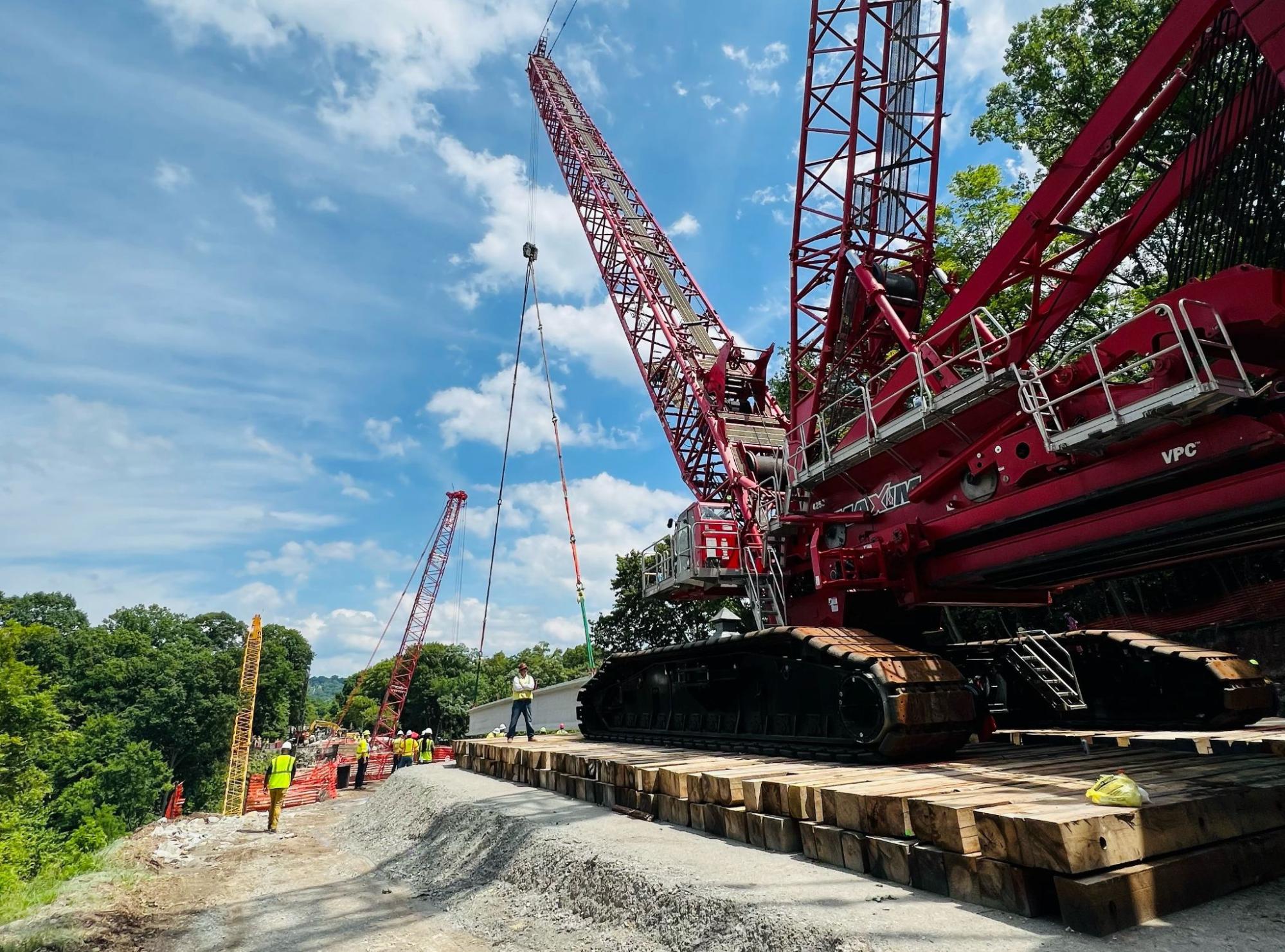
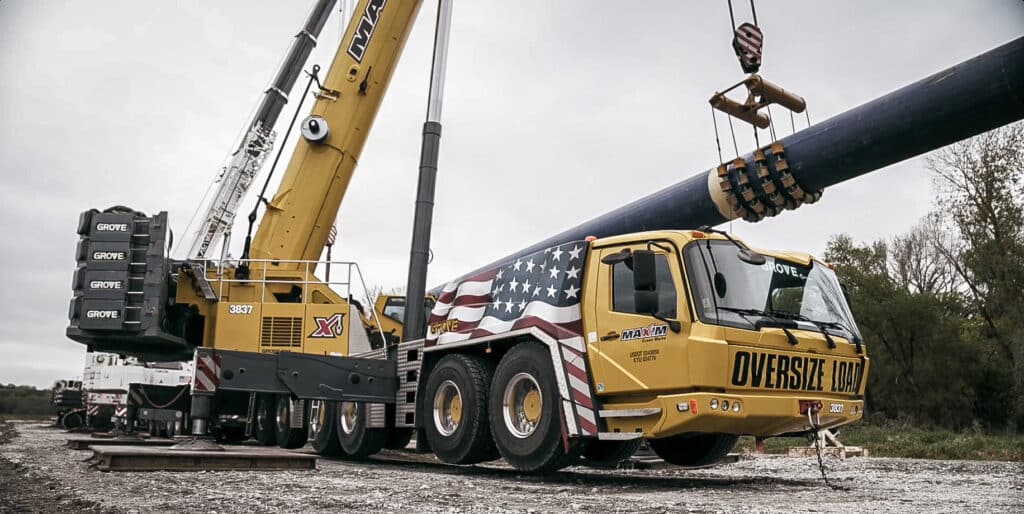
How a crane contacts the ground changes its bearing-pressure profile. Outrigger-supported cranes carry the full load on a few pads, creating high, concentrated pressures. Crawler cranes spread load along two tracks over a larger area, while still imposing loads the ground must carry.
- Outrigger loading: machines such as all-terrain cranes transfer load through outrigger floats onto pads. Because the contact area is small, pressure at each pad can be very high, which is why pad selection and ground support matter.
- Track loading: crawler cranes ride on tracks that spread weight over a longer footprint, but the loads are large and can shift toward one side during a pick, so the ground under the tracks still has to be evaluated.
Crane Mats, Cribbing, and Outrigger Pads as Supporting Materials
Supporting materials are the blocking, mats, cribbing, and pads placed between the crane and the ground to spread its load over a larger area. By increasing the contact area, they lower the pressure on any single point and help bring ground bearing pressure within what the soil can carry. OSHA recognizes these supporting materials as a standard means of making ground conditions adequate.
- What crane mats do: mats and cribbing distribute concentrated loads across a wider footprint, reducing the pressure that reaches the soil, and outrigger pads do the same beneath outrigger floats. The larger and more rigid the material, the more it spreads the load.
- What crane mats are made of: they are commonly built from hardwood timbers, engineered laminated wood, steel, or composite materials, chosen for the loads and site conditions involved.
- Whether every crane needs them: the need depends on the crane’s loads, its contact method, the manufacturer’s specifications, and the strength of the ground. Firm, high-capacity ground may need little support, while soft or uncertain ground often does.
What Crane Site Readiness Involves
Crane site readiness means confirming, before the crane arrives, that the ground can support the planned lift. It connects the crane’s load data to the site’s actual conditions, with the engineering judgment to decide whether the ground is adequate or needs preparation and supporting materials. The inputs that inform a ready site include:
- Crane loading data: the manufacturer’s outrigger and track loads for the specific machine and configuration.
- Site and soil assessment: information on soil type, moisture, compaction, and grading, often drawn from geotechnical data or site drawings.
- Subsurface information: known voids, utilities, tanks, and backfilled areas beneath the setup zone.
- Engineering judgment: the analysis that ties those inputs into a decision about ground adequacy and supporting materials.
Because this work combines regulated responsibility, equipment-specific data, and site-specific soil conditions, it belongs with people who have a high level of expertise, not a field estimate. It is also the stage where ground assessment connects to the rest of pre-lift planning. On dense or constrained jobsites, ground conditions are only one of several limits a lift must account for, as Maxim’s look at urban crane lift planning shows.
When to Bring In Engineering and Lift-Planning Support
Complex sites, heavy or critical lifts, soft or unknown soils, and tight urban or infrastructure conditions all call for engineering and project-management support. When the ground is uncertain or the loads are high, an engineered approach protects the schedule, the budget, and everyone on site.
Maxim Crane operates more than 50 locations across five U.S. regions, with engineering built into its lifting services. Its engineering and project management teams evaluate load, reach, crane configuration, and site access together so the right crane and rigging are matched to the lift you describe. For projects that need crews, operated and maintained rentals put a knowledgeable team on the equipment, and for the most demanding picks, engineered rigging adds custom solutions.
Safety sits underneath all of it. Maxim works to a zero accident safety philosophy, treats safety as a core value, and holds ISO 9001, ISO 14001, and ISO 45001 certifications.
The value of that planning shows up on difficult ground. On Lincoln, Nebraska’s Water 2.0 Initiative, Maxim supported Michels Trenchless by coordinating eight cranes to lift and position a 288-ton water pipeline for a Platte River crossing, the kind of water-adjacent site where ground conditions shape every setup decision. Infrastructure work like this is where ground readiness matters most.
See how this comes together on a heavy crawler lift, where ground bearing pressure and site readiness drive every setup decision:
Frequently Asked Questions About Ground Bearing Pressure
What is the difference between ground bearing pressure and soil bearing capacity?
They are two halves of the same safety check. Ground bearing pressure is the load a crane imposes through its outriggers or tracks. Soil bearing capacity is the maximum load that ground can carry before it fails. A setup is safe only when the pressure stays below the capacity.
What is a safe ground bearing pressure for a crane?
There is no single safe number for every crane or site. A safe ground bearing pressure stays below the verified bearing capacity of that specific ground, for that specific crane and configuration. Determining it requires the crane’s loading data, the site’s soil conditions, and engineering judgment, which is why it is assessed, not guessed.
Do you need crane mats for every crane?
No. Whether mats are needed depends on the crane’s loads and contact method, the manufacturer’s specifications, and the strength of the ground. Soft, saturated, or uncertain ground often calls for mats, cribbing, or pads, while firm, high-capacity ground may need little.
Who is responsible for ground conditions at a crane lift?
The controlling entity on the project, often the general contractor, is responsible. Under OSHA 1926.1402, that entity must ensure adequate ground conditions and disclose known hazards beneath the setup area, such as voids, tanks, and utilities.
Plan the Ground Before You Plan the Lift
Every safe lift starts with ground that can carry what the crane puts down, and that responsibility splits cleanly. The controlling entity owns the ground: confirming soil capacity, identifying subsurface hazards such as utilities and voids, and bringing in soil or geotechnical experts to verify the site can take the load. Maxim Crane’s part is the equipment. When you share accurate ground and site information, Maxim matches the right crane to the lift and provides the outrigger and track loading figures it will impose, so you know what your prepared ground has to support. Request a quote to talk through your lift.
