

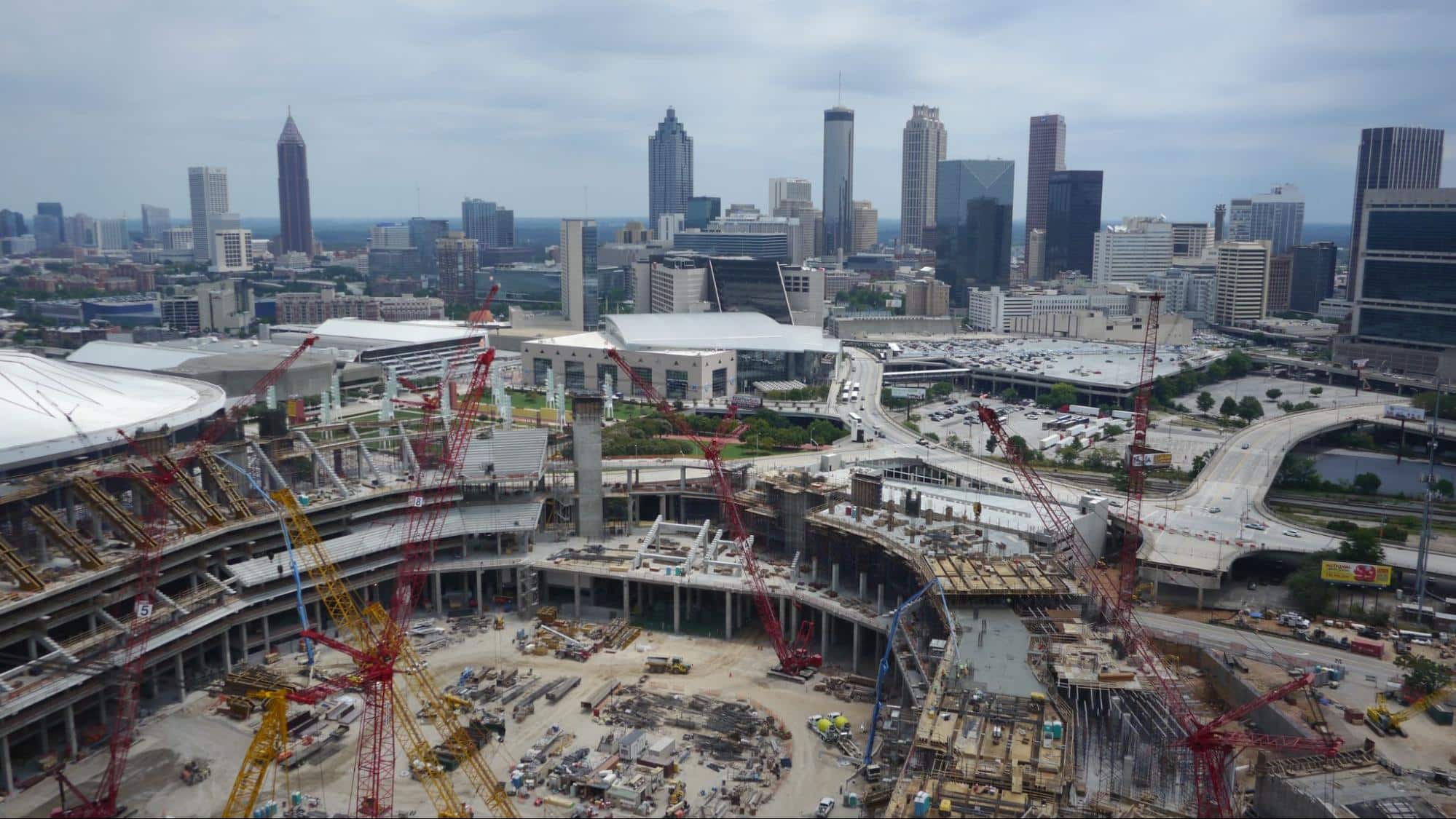
Urban crane lift planning requires a fundamentally different approach than open-site operations. Dense traffic patterns, underground utilities, overhead power lines, occupied buildings, and tight right-of-way corridors all compress the margin for error. When the stakes include a convention center preparing for the 2028 Olympics or a downtown music festival drawing 95,000 fans, the consequences of poor planning extend well beyond the jobsite.
The difference between a lift that runs smoothly and one that triggers road closures, angry city officials, and schedule-wrecking delays comes down to how early and how thoroughly the project team maps constraints, evaluates setup locations, and locks in execution windows. This isn’t theoretical. It’s a repeatable process that turns complex urban lifts into controlled, low-disruption events.
This article breaks down that framework with real-world examples from two recent Maxim Crane projects: an HVAC replacement at the Long Beach Convention Center and a multi-stage build for CMA Fest in downtown Nashville.
Key Takeaways
Urban crane lifts compress every variable that affects project outcomes and schedule. Here’s what sets them apart and how to get them right:
- Constraint mapping comes first. Systematically cataloging right-of-way limits, underground utilities, overhead hazards, and occupancy schedules before selecting a crane or setup location prevents surprises on lift day.
- Setup-location trade studies reduce disruption. Comparing multiple crane positions against lift radius, ground-bearing capacity, and traffic impact identifies the option with the smallest footprint on the surrounding city.
- Weekend windows require early coordination. Securing off-hours execution windows typically takes 6–12 weeks of advance work with city agencies, utility providers, and venue operators.
- Two Maxim projects prove the framework. Maxim Crane replaced 19 rooftop HVAC units at the Long Beach Convention Center for the 2028 Olympics and built four downtown stages for Nashville’s CMA Fest—both without major city disruptions.
- Engineering turns constraints into plans. Dedicated engineering and project management services convert a constraint map into an executable lift plan covering crane selection, load-chart analysis, permit coordination, and traffic control.
Why Urban Crane Lifts Demand a Different Playbook
On an open construction site, the primary variables in a crane lift plan are load weight, lift radius, ground conditions, and weather. In an urban environment, those same variables exist—plus a layer of constraints that don’t appear on a load chart.


The added complexity falls into a few categories:
- Space restrictions: City streets limit where you can position a crane, how much counterweight you can deploy, and how long you can occupy the right-of-way. Pedestrian traffic, adjacent businesses, transit routes, and emergency-vehicle access all impose hard boundaries.
- Subsurface hazards: Underground infrastructure like water mains, gas lines, fiber-optic conduit, and subway tunnels can restrict outrigger placement and ground-loading capacity.
- Overhead obstructions: Power lines, communication cables, and neighboring building facades constrain boom swing and lifting paths.
- Regulatory requirements: According to OSHA’s crane operation standards, maintaining proper clearance from power lines and ensuring adequate ground support are regulatory requirements, not optional best practices. In a city, meeting those requirements often means the difference between a feasible lift and one that needs a completely different approach.
The consequence of skipping this analysis is predictable: last-minute changes to crane type or position, unplanned street closures, permit delays, and cost overruns that ripple across the project schedule.
Constraint Mapping: The Foundation of Every Urban Lift Plan
Constraint mapping is the process of systematically identifying every physical, regulatory, and scheduling limitation that affects where and when a crane can operate on a given site. It’s the first step in urban lift planning and the one most responsible for preventing surprises on lift day.
Right-of-Way Constraints
Before selecting equipment, the project team needs to know exactly how much space is available. This means documenting street widths, sidewalk setbacks, curb lines, lane-closure restrictions, and any adjacent property boundaries that limit crane footprint.
In cities like New York, Philadelphia, and Los Angeles, street closure permits require detailed site plans showing the crane’s physical footprint relative to travel lanes, pedestrian routes, and emergency access. These permits often carry lead times of two to four weeks—and that clock doesn’t start until the application is complete.
Underground and Overhead Hazards
Urban sites sit on top of decades of accumulated infrastructure. Water mains, sewer lines, gas mains, electrical conduit, and in many cities, subway tunnels all run beneath streets and sidewalks. Each one affects where outriggers can be placed and how much ground-bearing pressure the site can support.
Overhead, power lines, communication cables, and adjacent building facades limit boom height, swing radius, and lifting path. Mapping these constraints early determines whether the lift can proceed with a standard crane configuration or whether the team needs alternatives—a shorter boom, a different crane type, or a revised setup position that avoids the obstruction.
Occupancy and Scheduling Conflicts
Urban lifts don’t happen in a vacuum. Convention centers host events. Office buildings are occupied. Retail corridors generate foot traffic. Transit systems run on fixed schedules.
Identifying low-occupancy windows—weekends, holidays, overnight hours, event dark days—is often the key to executing a lift without shutting anything down. But those windows only exist if someone maps them early enough to build the lift schedule around them.
Choosing the Right Setup Location and Lift Radius
Once the constraint map is complete, the next decision is where to put the crane. In urban settings, this isn’t a matter of convenience. It’s a trade study that balances competing factors.
Setup-Location Trade Studies
A setup-location trade study evaluates multiple potential crane positions against a set of weighted criteria. The factors that matter most in urban environments include:
- Lift radius and load-chart capacity: A crane positioned farther from the load needs more capacity at that radius. Moving the crane closer reduces the required capacity but may encroach on streets or adjacent properties. The load charts for each candidate crane type define these trade-offs precisely.
- Ground-bearing requirements: Outrigger loads concentrate significant force on a small area. Urban surfaces like parking decks, sidewalks, and utility corridors may not support those loads without matting or engineered cribbing.
- Traffic and pedestrian impact: Some setup positions close one lane; others close an entire block. The difference can determine whether a permit takes two weeks or two months.
- Mobilization logistics: Getting the crane to the setup position—and out after the lift—requires a plan that accounts for transport routes, staging areas, and assembly/disassembly time.
Matching Crane Type to Urban Constraints
Crane selection in urban settings is driven as much by access and footprint as by lifting capacity. The constraint map dictates what’s feasible, and the right crane type follows from that analysis:
- All-terrain cranes are often the default for urban lifts. They travel on public roads and don’t require the extensive assembly process of a crawler crane.
- Tower cranes provide a fixed solution with a smaller ground footprint for projects involving repeated lifts over longer durations.
- Boom trucks offer the fastest mobilization for lighter lifts in tight spaces.
A 500-ton all-terrain crane that could handle the load easily may be useless if the setup location can’t accommodate its outrigger spread. This is why engineering services are a critical part of the selection process, not an afterthought.
Weekend and Off-Hours Execution Windows
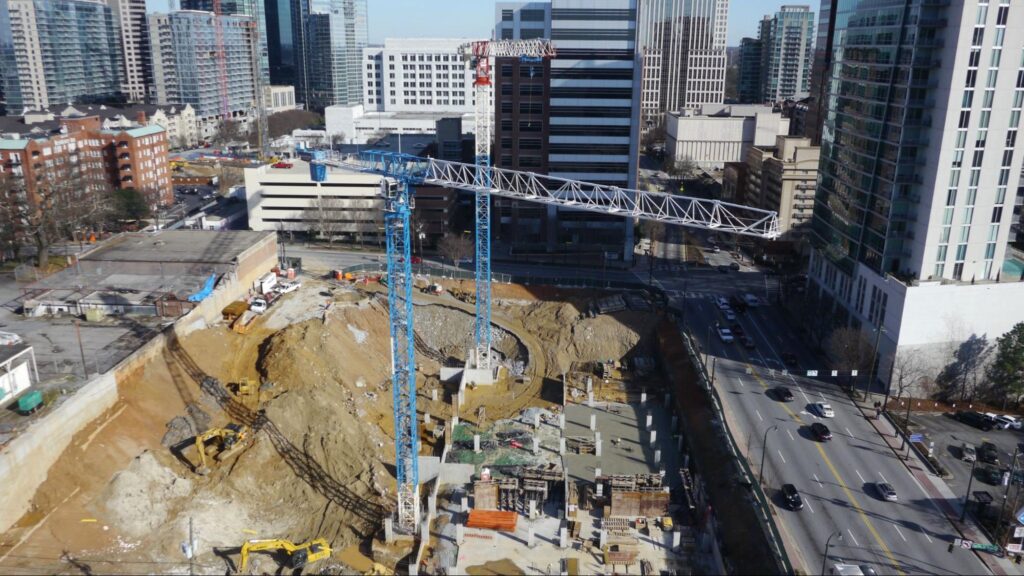
Shutting down a city block for a week isn’t realistic — and in most cases, it isn’t necessary. The right scheduling strategy shifts crane operations into windows where urban activity is already at its lowest.
Building a “No-Shutdown” Lift Schedule
The goal of a no-shutdown lift schedule is to execute all crane operations within windows that avoid peak traffic, business hours, and public events. In practice, this usually means weekends, overnight hours, or holidays.
Building a workable schedule starts with the constraint map’s occupancy data and works backward from the lift itself:
- Calculate total crane time needed: mobilization, setup, lifts, breakdown, and demobilization.
- Identify available windows that provide enough continuous hours for each phase.
- Sequence the work to fit within those windows. If a single weekend isn’t enough, stage the work across multiple weekends with interim crane storage on-site or at a nearby staging area.
Coordinating Stakeholders and Permits
Urban lifts involve more stakeholders than any other type of crane operation. A typical coordination list includes the general contractor, building owner, city transportation department, police or traffic control, utility companies, transit authorities, neighboring property owners, and the crane provider’s engineering and project management teams.
Permit timelines are the long pole in this tent. Most cities require two to six weeks for crane-related street closure permits. Factor in the time needed to prepare site plans, traffic control plans, and insurance documentation, and the realistic lead time often stretches to 6–12 weeks. Starting this process late is the single most common cause of urban lift delays.
Case Study: Long Beach Convention Center HVAC Replacement
As Long Beach prepares to serve as a major venue city for the 2028 Olympic and Paralympic Games—hosting events including handball, water polo, artistic swimming, and beach volleyball—the city’s convention center required significant infrastructure upgrades. Among the most logistically complex: replacing 19 rooftop HVAC units on an active public facility in the heart of a busy downtown waterfront district.
The scope of the project created overlapping constraints:
- Active venue: The convention center hosts events year-round, meaning lift operations had to work around the facility’s booking calendar.
- Dense urban surroundings: The facility sits in downtown Long Beach near hotels, restaurants, pedestrian areas, and parking structures that limit crane access and setup options.
- Underground and overhead considerations: Limited street access and proximity to utilities required careful outrigger placement and lift-path planning.
Maxim Crane executed the project successfully, replacing all 19 HVAC units without disrupting the convention center’s event schedule or surrounding downtown operations. Every crane position, every lift path, and every execution window was planned before equipment rolled onto the site. The project illustrates why constraint mapping and advance coordination matter—replacing rooftop mechanical equipment on a 400,000-square-foot public venue doesn’t allow for trial and error.
Case Study: CMA Fest Nashville Downtown Stage Build

In June 2025, Maxim Crane supported Nashville’s CMA Fest by building and dismantling four major downtown stages for a festival that drew an estimated 95,000 attendees across four days. The stages were located throughout downtown Nashville’s busiest corridors, surrounded by hotels, restaurants, transit stops, and heavy pedestrian traffic.
This project required a different kind of urban lift planning. Rather than a single large lift over a weekend, the CMA Fest stage build involved multiple crane mobilizations across several days, all sequenced to minimize street closures in an area already under heavy logistical pressure. Two non-negotiable deadlines defined the schedule:
- Build deadline: Stages had to be fully operational for the festival’s opening night.
- Strike deadline: Everything had to be dismantled immediately after the event concluded to restore normal downtown operations.
Maxim delivered flawless, on-time results. The project underscores a key principle of urban lift planning: when the execution window is non-negotiable—because 95,000 people are showing up on a fixed date—the only path to success is comprehensive advance planning, tight stakeholder coordination, and a provider with the fleet depth and regional presence to deliver.
How Engineering and Project Management Services Support Urban Lifts
The complexity of urban crane operations is exactly why engineering and project management services exist. A constraint map identifies the problems. Engineering converts those constraints into an executable lift plan. Project management handles the coordination.
Here’s how those services apply to urban lifts specifically:
- 3D lift planning: Maxim Crane’s engineering team models crane positions, boom clearances, and load paths in three dimensions against each site’s specific constraints. This catches conflicts—a boom that oversails an adjacent property, an outrigger over a utility corridor—before they become problems on the jobsite.
- Consolidated execution: For project leaders managing urban lifts, operated and maintained rentals eliminate the need to source equipment, operators, and engineering independently. That consolidation is especially important in urban environments where coordination complexity multiplies with every additional vendor.
- Proven partnerships: David Bareswilt from Turner Construction, which has partnered with Maxim for more than 30 years, has highlighted this kind of collaborative, long-term relationship as key to executing complex projects on time and without incident.
With more than 50 locations across five regions, Maxim Crane provides the fleet depth and geographic reach to support urban lift projects coast to coast—delivering the right equipment to the right place at the right time, even when the “right place” is a congested city block with a four-hour execution window on a Sunday morning.
See how a 30-year partnership between Maxim Crane and Turner Construction supports complex, high-coordination projects like these:
Frequently Asked Questions About Urban Crane Lift Planning
What makes urban crane lifts more complex than standard lifts?
Urban lifts add layers of constraint that don’t exist on open sites: limited right-of-way for crane positioning, underground utilities that restrict outrigger placement, overhead obstructions that limit boom swing, occupied buildings and active pedestrian areas that impose time-based restrictions, and a permit process that can take weeks to navigate. Each of these factors narrows the range of workable solutions and increases the need for advance engineering.
How far in advance should urban crane lift planning begin?
For most urban projects, lift planning should start 8–16 weeks before the target execution date. Permit applications alone can require 2–6 weeks for processing, and that doesn’t include the time needed to prepare site plans, traffic control plans, and engineering documentation. Complex projects with multiple lifts or high-profile venues may need even more lead time.
Can heavy crane lifts really be done without closing streets?
In many cases, yes. The key is identifying setup locations that keep the crane’s footprint within the project site or within a partial lane closure. Weekend and off-hours windows further reduce the need for major closures. That said, some lifts genuinely require full street closures due to load size, crane reach requirements, or required clearances. Constraint mapping identifies which scenario applies early enough to plan accordingly.
What role does 3D lift planning play in urban projects?
3D lift planning software models the crane, load, and surrounding environment in three dimensions, allowing the engineering team to verify boom clearances, swing paths, and outrigger positions before the crane arrives on-site. In urban settings, this is critical for identifying conflicts with adjacent structures, power lines, and overhead obstructions that may not be obvious from a 2D site plan.
Does Maxim Crane handle permits and traffic control for urban lifts?
Maxim Crane’s project management team coordinates the full scope of urban lift logistics, including permit applications, traffic control planning, stakeholder communication, and on-site execution oversight. This comprehensive approach is part of Maxim’s project management services, designed to handle the coordination complexity that makes urban lifts uniquely challenging.
Plan Your Next Urban Lift with Confidence
Urban heavy lifts don’t have to mean shutting down the city. With the right constraint mapping, setup analysis, and execution planning, even the most complex urban crane operations can run smoothly and on schedule. Request a quote from Maxim Crane to discuss your next urban lift project and learn how Maxim’s engineering and project management teams can help you plan and execute with minimal disruption.
